In 2022, after local attempts to create a pollinator garden in Agincourt Park failed, MAPP approached Agincourt Road Public School about overhauling their gardens, which had been left unattended since the Covid pandemic. After several discussions with the school administration and its principal Courtney O’Halloran, we received permission to work on the gardens in late 2023.
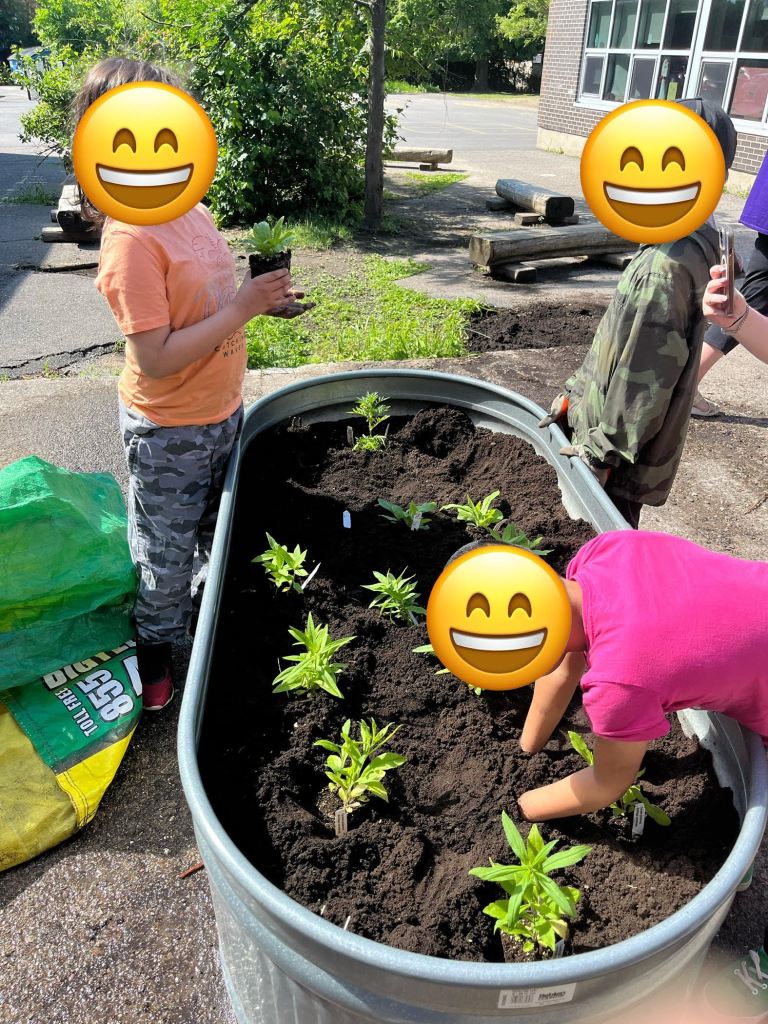
We decided community volunteers would do the heavier work, i.e., garden bed preparation, but we would involve the students in planting. Over the summer break, volunteers would maintain the beds until school resumed.
In the spring of 2024, MAPP cleared the four raised beds of weeds and grasses and then students helped to put in various native and non native plants. This included non-native plants like canna lilies, cockscomb and pansies for color and native pollinator plants such as various goldenrods, rubeckia, white vervain and different varieties of asters.
Over the summer, MAPP revamped the quiet garden area which involved removing weeds and grass to allow for native plants to be placed in. The trees were trimmed back to allow for better future growth. Various native plants such as milkweed, goldenrod, fleabane, Joe Pye weed, bergamont, hyssop and echinacea were planted .
Extensive effort went into clearing invasive plants from the Rain Garden area, which has massive amounts of bindweed, dog-strangling vine and Creeping Jenny.

In the fall, we removed the native plants from the raised beds and planted them in the ground in other garden areas. We then used the raised beds to overwinter the seedling trays that students had prepared as part of another MAPP project.
In 2025, we will add more native plants in all areas: again with the help of students, as this fosters a sense of ownership for the gardens. We will also be conducting remediation work in the Rain Garden area by planting taller native flowers such as goldenrod and asters to provide a habitat for pollinators.

 Maitland Area Pollinator Projects
Leave a comment